If you need Rockwall County sheriff service of process in a family case, the request begins with the District Clerk at 1111 East Yellowjacket Lane, Suite 200, Rockwall, Texas 75087, not with an informal request to the sheriff. After valid service, the respondent typically must answer by 10:00 a.m. on the Monday after the expiration of 20 days from service.
You may be trying to start a divorce, custody, child support, or modification case while also managing work, children, and a tense relationship with the other parent. A parent in Fate may need temporary orders, or a spouse in Heath may have no idea whether sending the petition by text will satisfy the court. The answer depends on formal service, the citation, and the return of service, not merely whether the other person knows a lawsuit exists.
Table of Contents
- Why Proper Service Matters in Your Rockwall Family Case
- Filing for Sheriff Service at the Rockwall County District Clerk
- Understanding the Answer Deadline and Court Structure
- Alternatives to Sheriff Service and Waivers
- The Return of Service Completing the Legal Record
- Next Steps for Recipients and Filers in Rockwall County
Why Proper Service Matters in Your Rockwall Family Case
A Rockwall parent may file a custody case, message the other parent in Royse City, and receive a reply: “I filed the petition. You know what this is about.” That exchange can show actual awareness, but it does not establish formal service. If the other parent later refuses to participate, the court still needs reliable proof that the respondent received the citation and petition before granting requested relief.
Service of process is the formal delivery of lawsuit papers. In a Texas family case, the respondent generally must receive the citation with a copy of the petition attached. Texas Court Help's explanation of service of citation explains service as the legal notice mechanism and discusses ordinary and substituted service when direct delivery is unsuccessful. Until service is completed or properly waived, the case cannot proceed against the other party in the same way.
What service changes
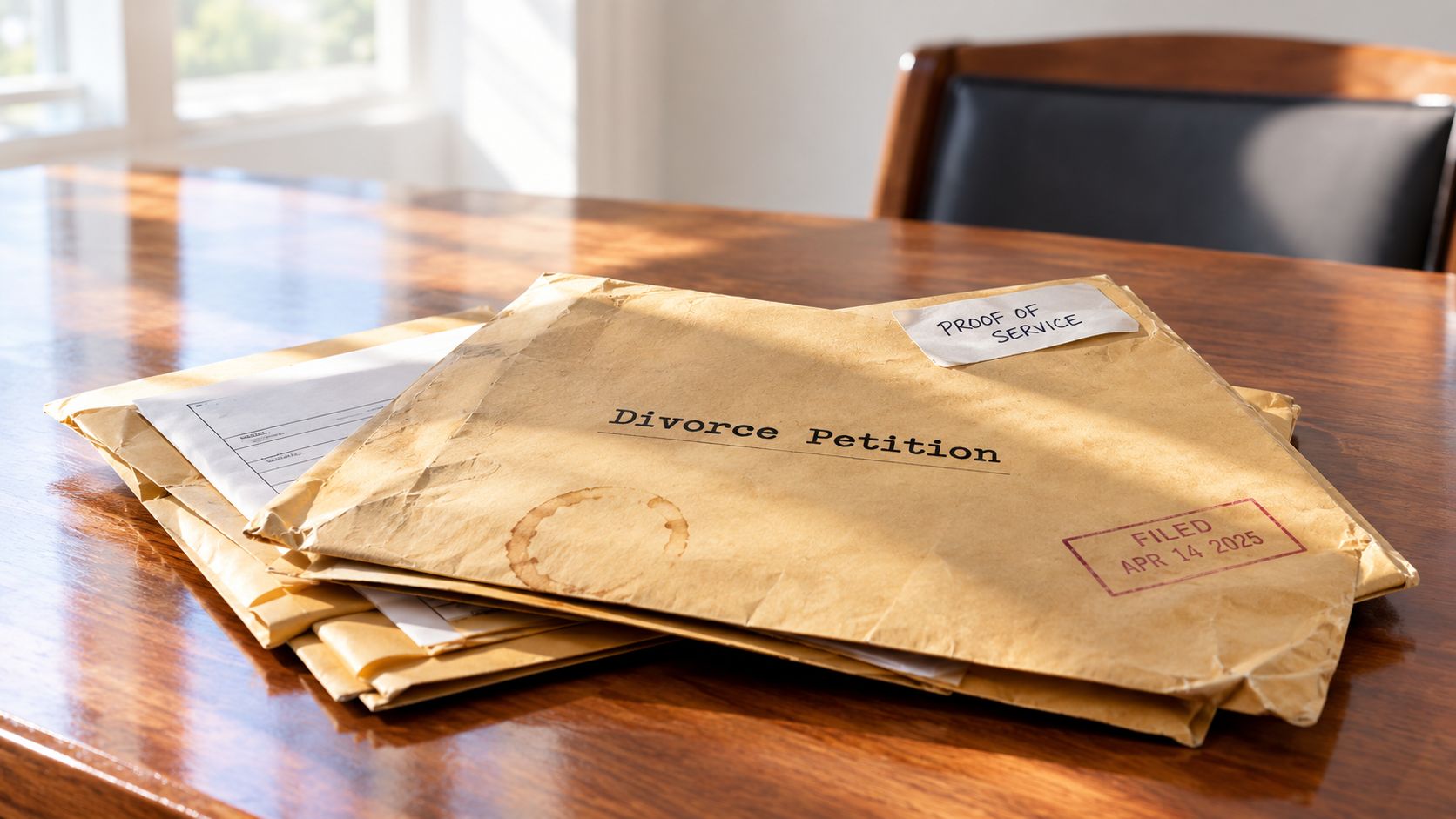
Proper service creates a verifiable event in the court record. It identifies the lawsuit, court, and cause number for the respondent, while also starting the period for filing an answer. In Rockwall County, the matter may be assigned to the 382nd, 439th, or 503rd District Court, depending on the case and court assignment.
The answer deadline is strict and is calculated from the service date. See the deadline section below for the full calculation. A missed deadline can expose the respondent to a default judgment, although the petitioner must still satisfy the court's procedural requirements. Texas Family Code Section 102.010 also addresses service by publication and courthouse posting, which follow different deadline calculations.
A parent seeking temporary orders, a spouse pursuing a divorce, or a party requesting enforcement should treat service as a priority. Delivery and proof work together like two parts of the same key. One shows that the papers reached the respondent; the other lets the court verify that the required procedure occurred.
Practical rule: A text message, email, or conversation may provide actual notice, but it does not automatically prove legal service.
Filing for Sheriff Service at the Rockwall County District Clerk
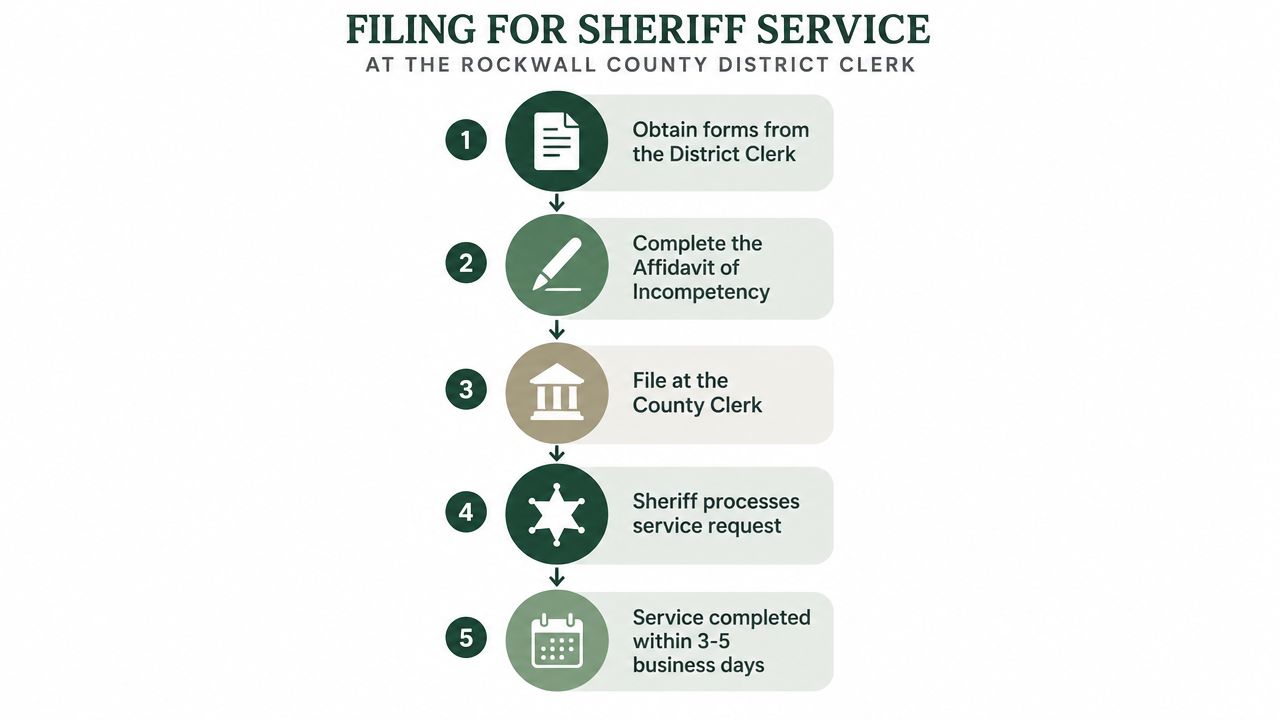
The Rockwall County sheriff doesn't issue the family-law lawsuit or create the citation. The case must first be filed through the appropriate clerk workflow, after which the citation can be issued for delivery by an authorized server. For district-court divorce, custody, support, modification, enforcement, and other family matters, the District Clerk is the key local records office.
The District Clerk's office is located at 1111 East Yellowjacket Lane, Suite 200, Rockwall, Texas 75087, and its public hours are Monday through Friday, 8:00 a.m. to 5:00 p.m. Rockwall County identifies its civil and family filings through the county's official system and District Clerk resources. Rockwall County civil and family information also reflects the county's move away from paper filing at the clerk's counter for attorneys since July 1, 2015.
A practical local filing sequence
-
Prepare the family case. The filing party begins with the appropriate petition, such as an Original Petition for Divorce, a custody petition, a support-related filing, or a petition to modify or enforce an existing order.
-
File through the proper clerk. District-court family matters belong in the district-court records system. Don't assume that the city printed on a mailing address determines venue. This matters for residents of communities that may cross county lines, including portions of Rowlett.
-
Request issuance of citation. The citation is the formal document that gives the respondent notice of the lawsuit. The clerk can issue it after the petition is filed and the filer requests service.
-
Provide the citation and petition for service. Sheriff service requires usable information about the person to be served and an address or location where delivery may be attempted. The actual delivery must be performed by a qualified server, not by the filing party or another person interested in the lawsuit.
-
Track the return. After delivery, the server's completed return must be filed with the court. Without that filing, the court's record may not show that service occurred.
The County Clerk and District Clerk aren't interchangeable. A family case assigned to a district court generally follows the District Clerk's recordkeeping and filing structure, while county-level offices have different responsibilities. Before making a trip, review the Rockwall County divorce filing fee schedule and District Clerk information and confirm current local procedures with the appropriate clerk.
A filer in McLendon-Chisholm or Mobile City should focus on the case's court and county, not just the nearest government building. Correct filing creates the paper trail that allows the sheriff or another authorized server to act.
Understanding the Answer Deadline and Court Structure
After service, the respondent must calculate the answer deadline from the actual date and method of service. The rule is more precise than “20 days from delivery.” Under Texas Family Code Section 102.010, the answer is due at 10:00 a.m. on the Monday next after the expiration of 20 days after service.
For example, if service occurred on Tuesday, September 8, the 20-day period expires Monday, September 28. The answer is then due at 10:00 a.m. on Monday, October 5. This example shows why counting only calendar days, or relying on a rough estimate, can lead to a missed deadline. The risk is especially serious in a divorce involving property, a custody dispute, child support, or temporary orders.
Why the local court structure matters
Rockwall County family cases proceed through the district-court system. The county has the 382nd, 439th, and 503rd District Courts, while the District Clerk maintains the case index and records for district-court civil and family matters. The assigned court and docket determine where filings appear and how the case is handled. They do not extend the respondent's answer deadline.
The court file works like the case's official paper trail. A wrong cause number, missing filing, or defective service record can make that trail incomplete and create problems later. Before filing or checking a deadline, confirm the cause number, assigned district court, parties' names, and the document being filed. The Rockwall County 382nd District Court family docket procedures provide local context for how family matters move through the district-court process.
Publication and posting use different calculations
Personal delivery is only one possible service method. If a judge authorizes service by publication, Texas law requires the citation to be published not later than the 20th day before the hearing. If the court orders posting at the courthouse door, the answer date is calculated from the expiration of the posting period. The signed order and the specific service method control the calculation.
A respondent who ignores properly served papers may face a default judgment. A filer who relies on an incomplete or inaccurate return may need to correct the record before the court can grant the requested relief. Each date and filing should therefore be checked against the docket, the service documents, and the court's orders.
Alternatives to Sheriff Service and Waivers
Sheriff service is one route, but it isn't the only lawful path. Texas law allows service by personal delivery or certified mail, return receipt requested, under the ordinary methods described in the Texas Court Help resource. A certified process server, sheriff, constable, clerk in appropriate circumstances, or another court-authorized adult may perform service, subject to the rules governing who can serve and who cannot.
A waiver of service works differently. In a divorce, the respondent may sign and file a waiver after the suit is filed, acknowledging receipt of the petition and waiving formal issuance and service. This can be useful when the divorce is cooperative and both spouses understand that signing the document has legal consequences.
When a waiver may fit
A waiver may make sense in an uncontested Rockwall County divorce or a cooperative custody modification. It can avoid arranging an in-person delivery and may reduce delay or expense. It isn't a casual acknowledgment, however. The document should be reviewed carefully, and the respondent should understand what rights are being waived and what documents have been received.
The method becomes less attractive where there are safety concerns, a history of family violence, disagreement about the petition, or a realistic concern that the other party will later dispute notice. In those circumstances, formal service creates a clearer record of what was delivered and when.

The Rockwall County constable service information for divorce papers may help a filer compare local service options. The right choice depends on the family dynamics, the respondent's location, the urgency of requested relief, and whether the case is likely to become contested.
Texas also permits several categories of qualified people to serve citation, including a sheriff or constable, a certified process server, a clerk when service is made by registered or certified mail, and a court-authorized person who is at least 18 years old. A party or interested person can't serve the lawsuit. Texas State Law Library guidance on serving a defendant explains that distinction.
The Return of Service Completing the Legal Record
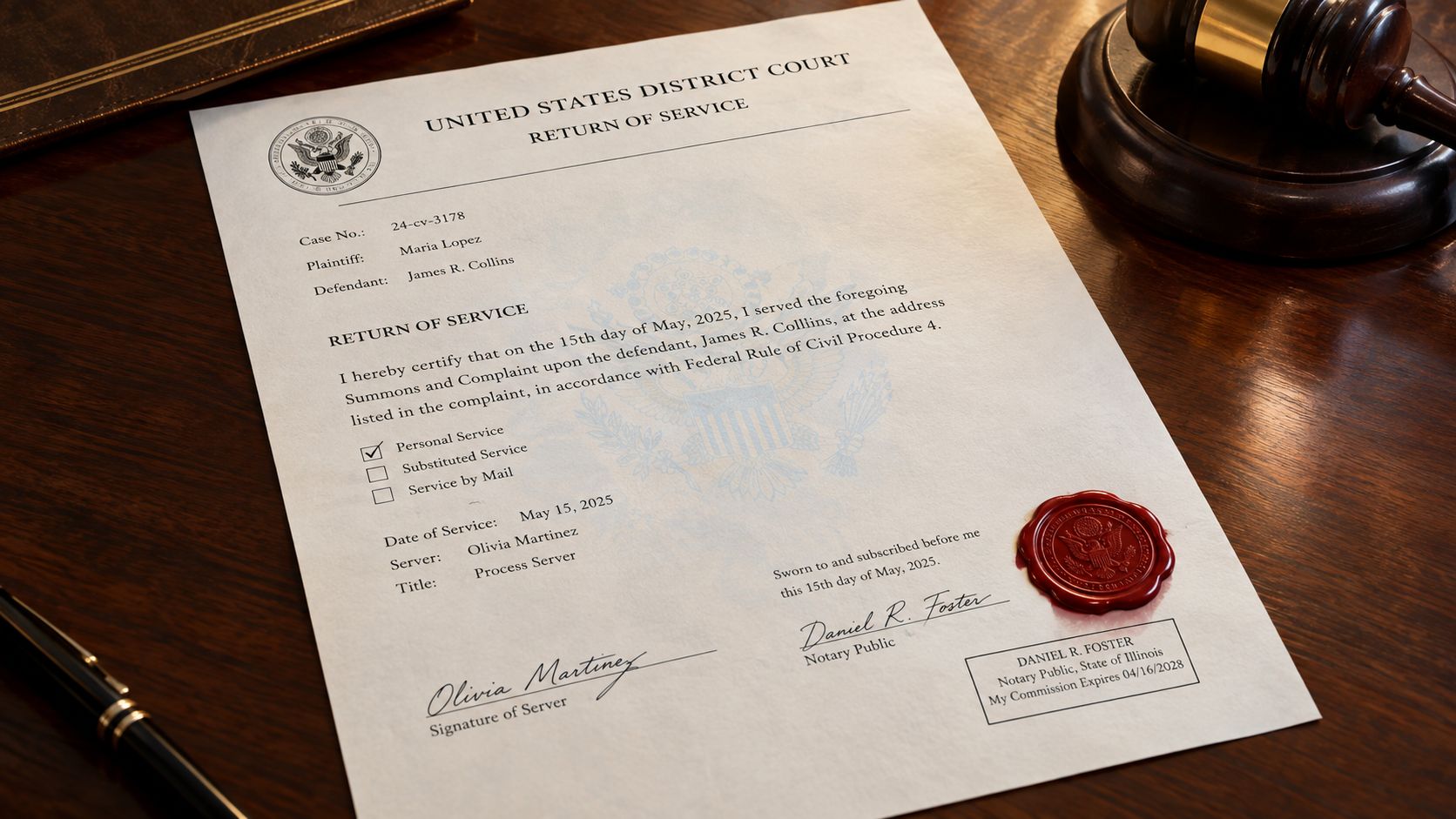
Delivery alone isn't the end of the process. The return of service is the document that tells the court what happened. Texas Rule 107 requires specific information, including the cause number, court, description of the papers served, when the server received them, the identity of the person served, the address, the date and manner of service, and identifying information for a certified server when applicable. Texas Rule of Civil Procedure 107 sets out these requirements.
Consider a hypothetical custody case involving a respondent who lives near Heath. A sheriff's deputy attempts delivery at the listed address, speaks with someone who says the respondent moved, and makes another documented attempt at a different location. The respondent isn't served. Those attempts don't establish completed service, but they may become important evidence supporting a later request for substituted service.
Failed attempts still need a usable record
When personal service fails, the server's return should document the diligence used and the reason delivery failed. Texas court materials concerning service and unsuccessful attempts explain why that record matters before a judge considers substituted service or publication.
A vague entry such as “unable to serve” may not tell the court enough. The record should allow the judge to understand where the server went, what was attempted, and why the effort did not succeed. The filer should obtain and review the return rather than assuming the server's work automatically appears in the case file.
Filing the return protects the case
After service by a sheriff, constable, or private server, the completed return is filed with the court. TexasLawHelp's guide to serving initial family-law papers explains that the return shows when and where service occurred and provides the proof needed for later proceedings.
This record becomes especially important if the respondent seeks to challenge a default judgment or argues that the court lacked proper notice. Accurate documentation doesn't guarantee that every later dispute disappears, but it gives the court a reliable foundation for evaluating what occurred.
Next Steps for Recipients and Filers in Rockwall County
If you've been served, don't set the citation aside while you gather information. Read the petition, identify the court and cause number, record the date and method of service, and calculate the answer deadline from the service date. Because the deadline is tied to 10:00 a.m. on the Monday after the 20-day period, a family-law attorney should review the papers promptly if you have questions about divorce, custody, support, property, enforcement, or protective orders.
If you filed the case, confirm that the citation and petition were delivered to an authorized server, provide accurate location information, and check whether the return has been completed and filed. If the respondent can't be found, preserve the documented attempts rather than treating failed delivery as completed service.
A checklist for each side
For the respondent:
- Preserve the papers: Keep the citation and petition together, including every attachment.
- Calendar the deadline: Calculate the answer date from the actual service date, not the filing date.
- Assess immediate risks: Identify requests involving children, property, support, temporary orders, or protective relief.
- Get case-specific help: A lawyer can explain the response options without assuming your facts match another family.
For the filer:
- Confirm the court: Verify that the matter is in the correct Rockwall County court and filing system.
- Use a qualified server: A party or interested person can't serve the citation.
- Review the return: Check the date, time, location, documents, identity, and manner of service.
- Address failure promptly: A documented unsuccessful attempt may support a request for another authorized service method, but it isn't the same as completed service.
For residents of Rockwall, Heath, Fate, Royse City, McLendon-Chisholm, and other county communities, local filing details matter, but the correct procedure also depends on the particular family case. Service questions can affect divorce, custody, child support, possession and visitation, modifications, enforcement, CPS matters, adoption, and appeals.
The Law Office of Bryan Fagan, PLLC offers family-law guidance for Rockwall County clients dealing with service, divorce, custody, support, and related court proceedings. If you need help reviewing a citation, planning sheriff service, or confirming that a return of service supports your case, visit The Law Office of Bryan Fagan, PLLC to learn about the next step.